Open Water Diver Course: Diver Training
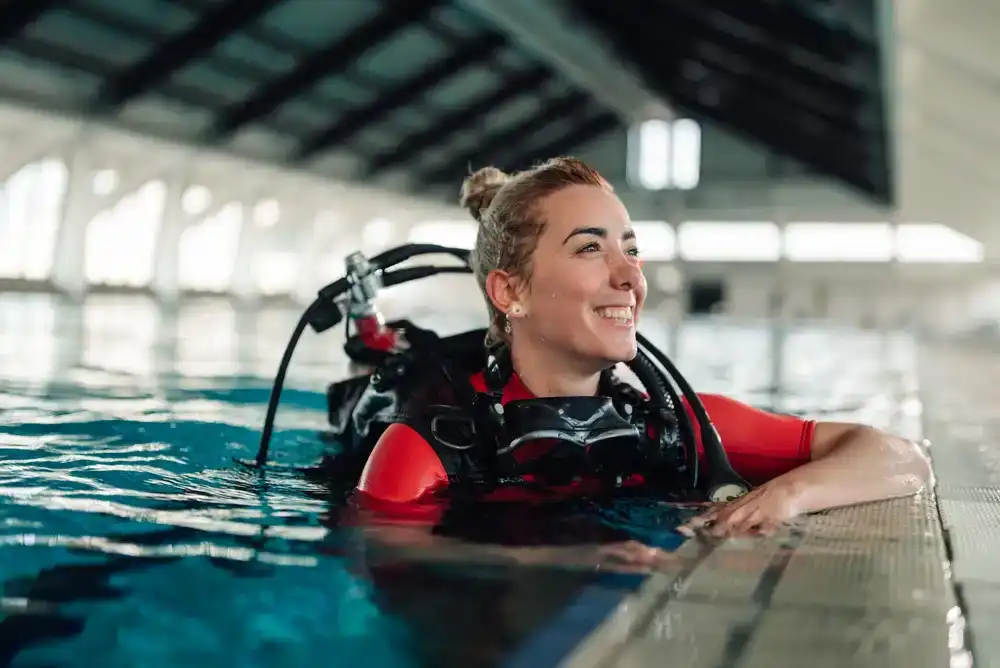
Diver Training is the first, basic certification for scuba divers. Most diving agencies call it the Open Water Diver course. All of the agencies teach the same basic skills of how to be a competent scuba diver.
You will learn how to assemble and check your own gear. You will spend time practising skills like mask removal, regulator recovery, buoyancy control and finning in the water. The goal is that you should be able to dive and deal with common issues, like a flooded mask, in a calm and independent way.
At the end of the course you will be a qualified scuba diver, able to take your new skills around the world on underwater adventures (with some limits).
Who should do Diver Training
Anyone who wants to dive should do Diver Training. It is the foundation for all other diver training.
Whether your goal is to dive regularly at home or just on holiday, the basic Diver Training is a prerequisite for everything else in the world of scuba diving.
Most of the time you need to be fit enough to handle the weight of the gear and be able to swim. Ages can start from 12, but some instructors and training agencies ask for students to be older. If you are unsure about your fitness, talk to the dive center and maybe start with a try dive to check you can handle the gear, but most people are fine.
What to expect in Diver Training
Most courses take between 4 and 6 days to complete. In some places you can do the course over a few weekends, or just set some time aside while on holiday to get it done.
There will be a combination of theory and practical skills. The theory will explain the science of diving, buoyancy and equipment management. There will be some training on dive planning and how to manage nitrogen loads over multiple dives. Depending on the course this might involve dive tables, computers or an online tool like the DiveHub Planner.
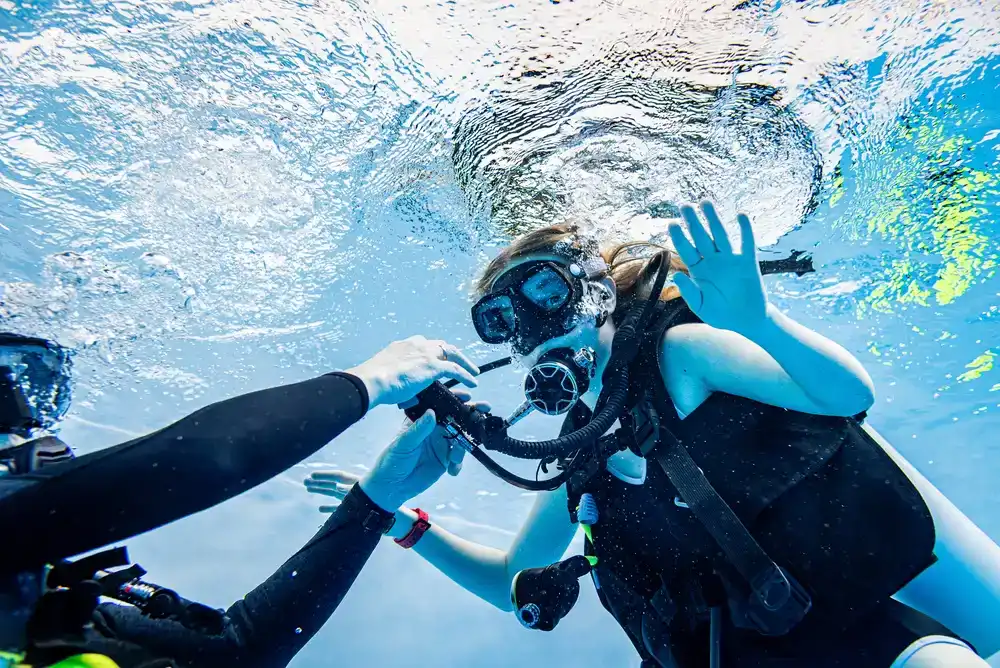
You will normally do 4-5 dives in a basic training course. They will all be shallow dives and you get the chance to practise your skills until they become second nature. Most courses will have an instructor and maybe some divemasters to help them.
The instructors will have a list of items that need to be signed off for you to complete the course. These will include understanding all the theory and demonstrating you can complete the skills in the water. Judging the skills can be fairly subjective and different instructors are looking for different things, so talk to them about what they expect to see and where you can improve. We generally like stricter instructors because they produce safer divers at the end of the course.
During your Diver Training you will learn the importance of logging your dives. Logging your dives gives you a record of your experience, what you have seen and the issues you encountered. It is essential for future instructors to be able to understand your experience, and for you to understand your own level. You might be given a paper logbook, but most dive centers are moving to an online option like DiveHub.
Generally you cannot fail a Diver Training course. Sometimes people need a few extra dives or a bit more instruction to get everything nailed, but your instructor will be there to support you.
What can you do after Diver Training
Once you complete the course you will officially be a scuba diver. You can take your new certification to any dive center and go diving, but there are some limits.
Most training agencies limit new divers to 18 metres of depth and open water. That means caves, wrecks and any site that's too deep are off limits, but as most of the fish are in the first 18 metres of the sea you will still be able to access all the best reefs in the world.
Your certification is also limited to dive conditions similar to where you trained. This requires a bit of judgement to decide what is similar. The reason for the rule is that a diver who has only dived in the clear, warm waters of Thailand is going to get a shock if they try to dive in the cold waters of Northern Europe. Those places are still open to you, but talk to your local dive center and spend some time with an instructor to learn how to dive there safely.
What comes after Diver Training
After Diver Training comes diving. The best thing to do is to get some diving experience behind you. There is no substitute for experience, and the more diving you do the better you will be.
You can also move on to your Advanced Diver Training. This can be done immediately after your Diver Training if you want to. We normally suggest waiting until you have some more dives before doing the advanced course, but if you have a good instructor while on holiday it can make sense to do it straight away.