Try Dive: What to Expect on Your First Scuba Dive
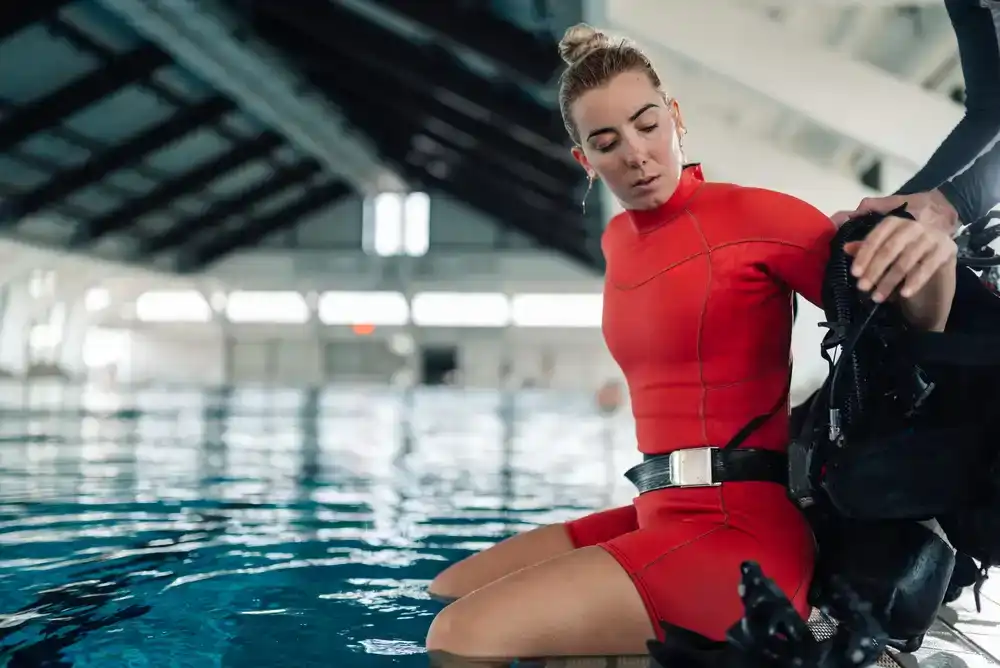
If you think you want to learn to scuba dive, a try dive is normally the first step.
A try dive allows you to get all the gear on and take your first breath underwater. Every training agency and dive center does it a bit differently, but this guide will help you to understand what to expect.
Who should do a Try Dive
A try dive is a good idea for anyone who wants to see if scuba diving is for them. The requirements from each dive center will vary, but generally you will need to be 12 years old and in good general health. You should be able to swim and carry the gear. The requirements are not very high, so as long as you don't have any specific problems you should be fine. If in doubt, ask the dive center, and they will talk to you about any health concerns.
Most people do a try dive to see if they like scuba diving and if they want to do a full course. It can be hard to judge scuba diving from a try dive. Some people come out loving it and want to book their open water course, but others are a bit more hesitant. Diving can be scary and it might feel very unnatural, but that does not mean scuba diving is not for you. Some people do several try dives, often with different dive centers in different places, before they find the joy underwater.
What to expect on a Try Dive
Typically, you will start with some e-learning and some time with an instructor. You'll learn about the physics of scuba diving, the kit to expect and some of the common hand signals to use underwater. It should help you to understand the world of diving and give you a chance to ask questions. You'll talk about basic skills like clearing your mask and what to do if your regulator falls out.
Once you're finished with the theory it's time to get in the water. This is normally called confined water; it could be a pool or a shallow beach.
This will probably be your first time putting on scuba gear. It might feel a bit heavy and odd to start with, but your instructor will be on hand to help. Having the equipment on will help bring the theory to life and help you to understand where everything goes.
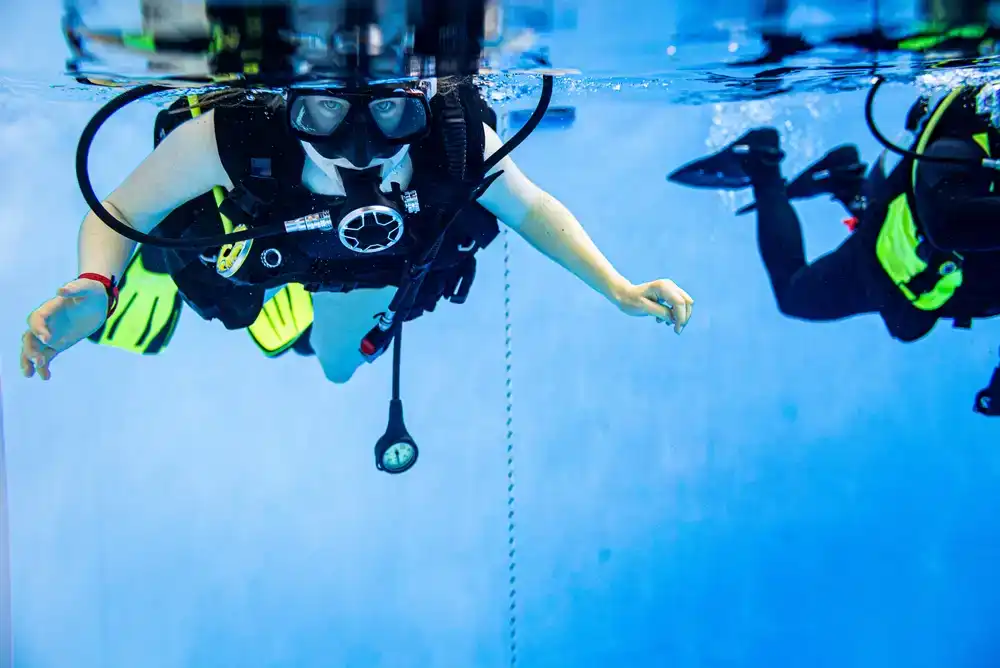
With the gear on, it's time to get in the water. The instructor will take you into the water and practise the skills with you. You'll get a chance to try inflating your BCD, taking your regulator out and clearing your mask. None of the skills are that hard and you will be in very shallow water to safely practise and gain confidence. You will have a chance to swim around with your fins on so you can get a feel for moving underwater. You will probably only be in 1-2 metres of water, so you always have the option to go to the surface, and the instructor will be there to keep you safe.
Once you're done in confined water it will be time to get into open water. This might be a bit further down the beach or a completely different site. Now you're in the water, you are scuba diving. Your instructor will be in the water with you and will stay by your side throughout the dive. They will lead you around the dive site to show you all the interesting things you can only see underwater. The instructor will probably be making adjustments to your gear and checking your gauges to keep you safe.
Your open water dive is your first chance to try scuba diving. Most people come out of the water excited and ready to move on to their open water course. If that's not you, do not worry. Some people need a few dives before they can relax in the water and enjoy it. If you were unsure about your try dive but you still want to dive, then you have a few options:
- You can go for another try dive. You might find a try dive at a different center or with a different instructor just suits you better. Sometimes it was just the wrong day: maybe the weather was bad or you were not feeling 100%, and another day changes everything.
- You could go straight on to your open water course. Have a conversation with your instructors and discuss your concerns from the try dive. Some people will never feel comfortable until they know how to manage their own equipment.
- Wait. Give yourself time to reflect and decide on your next steps. Some divers go years between a try dive and their open water certificate.
What can you do after a Try Dive?
The short answer is nothing.
A try dive does not make you a certified diver and doesn't even count towards it.
So what's the point? It gives you a chance to try breathing underwater, get a feel for scuba diving and decide if a diving course is for you.
What comes after a Try Dive?
Most people who enjoy their try dive go on to book their diving certification, Diver Training. The try dive is not essential for a diving course, but it can help you to make a decision before committing to a longer course.